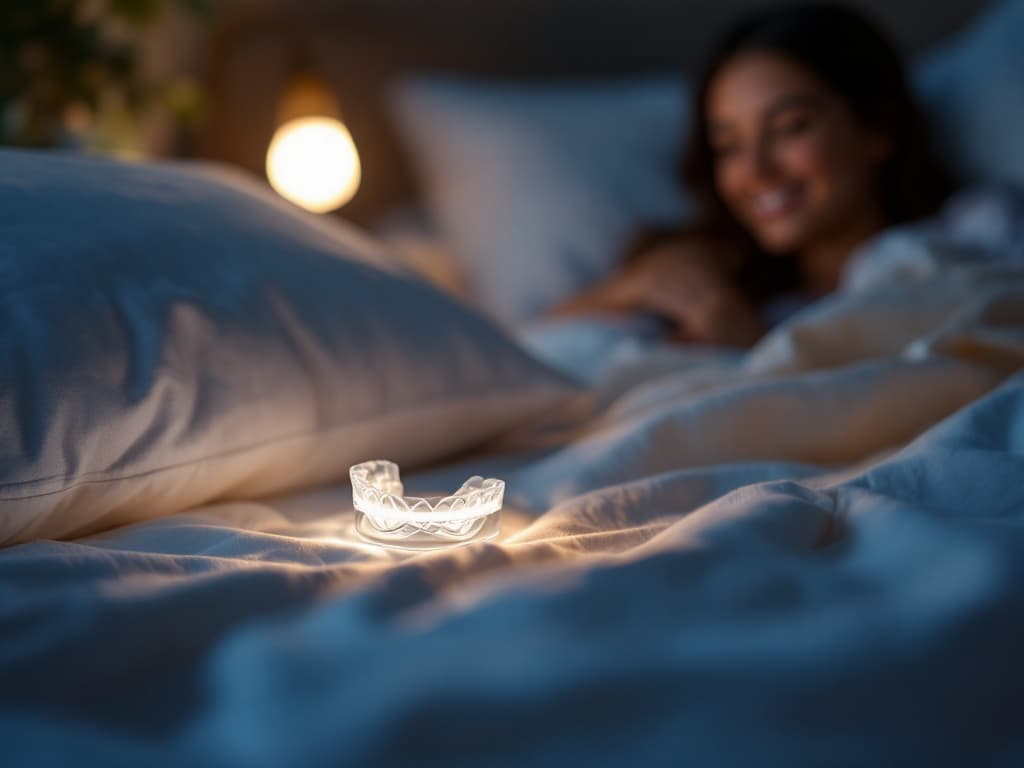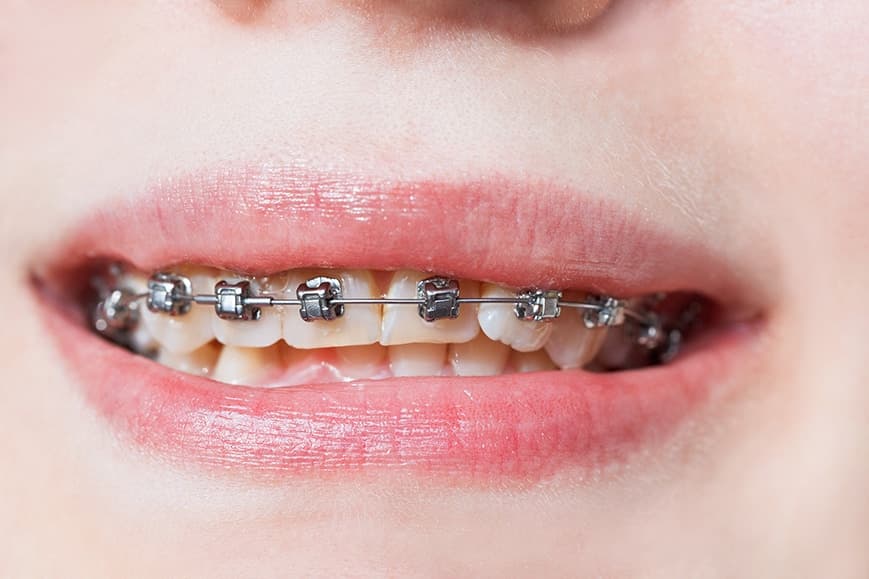
Retainers are the device you must wear after braces come off, to hold your teeth in place and stop them shifting back. Many people mistakenly think braces treatment is over once the braces come off, but retainers are just as important as the braces themselves — skip them, and years of investment can be undone. This article covers everything you need to know in detail — types, price, and care — from Panda Dental Clinic.
Why Wear a Retainer After Braces?
Our teeth aren’t fixed rigidly to the jawbone — they’re held by the periodontal ligament, which is flexible and constantly adapting. This is why dentists can move teeth with braces in the first place, but it also means that right after braces come off, these fibers haven’t fully adapted to the new position yet, so teeth tend to "remember" their old position and try to shift back.
Beyond that, everyone’s teeth — whether they’ve had braces or not — can shift throughout life, from factors like jaw growth with age, daily chewing forces, mouth breathing, abnormal swallowing habits, or tongue pressure. Wearing a retainer as your dentist recommends is the only way to hold your braces results long-term — whether you had metal braces, Damon braces, or clear aligners, everyone needs a retainer.
How Many Types of Retainers Are There?
Panda Dental Clinic offers 4 types of retainers: 3 removable types (colored, clear, bracket-style) and 1 fixed type. Each has different pros and cons; your dentist will help recommend the type suited to your teeth and lifestyle.
Colored Retainer
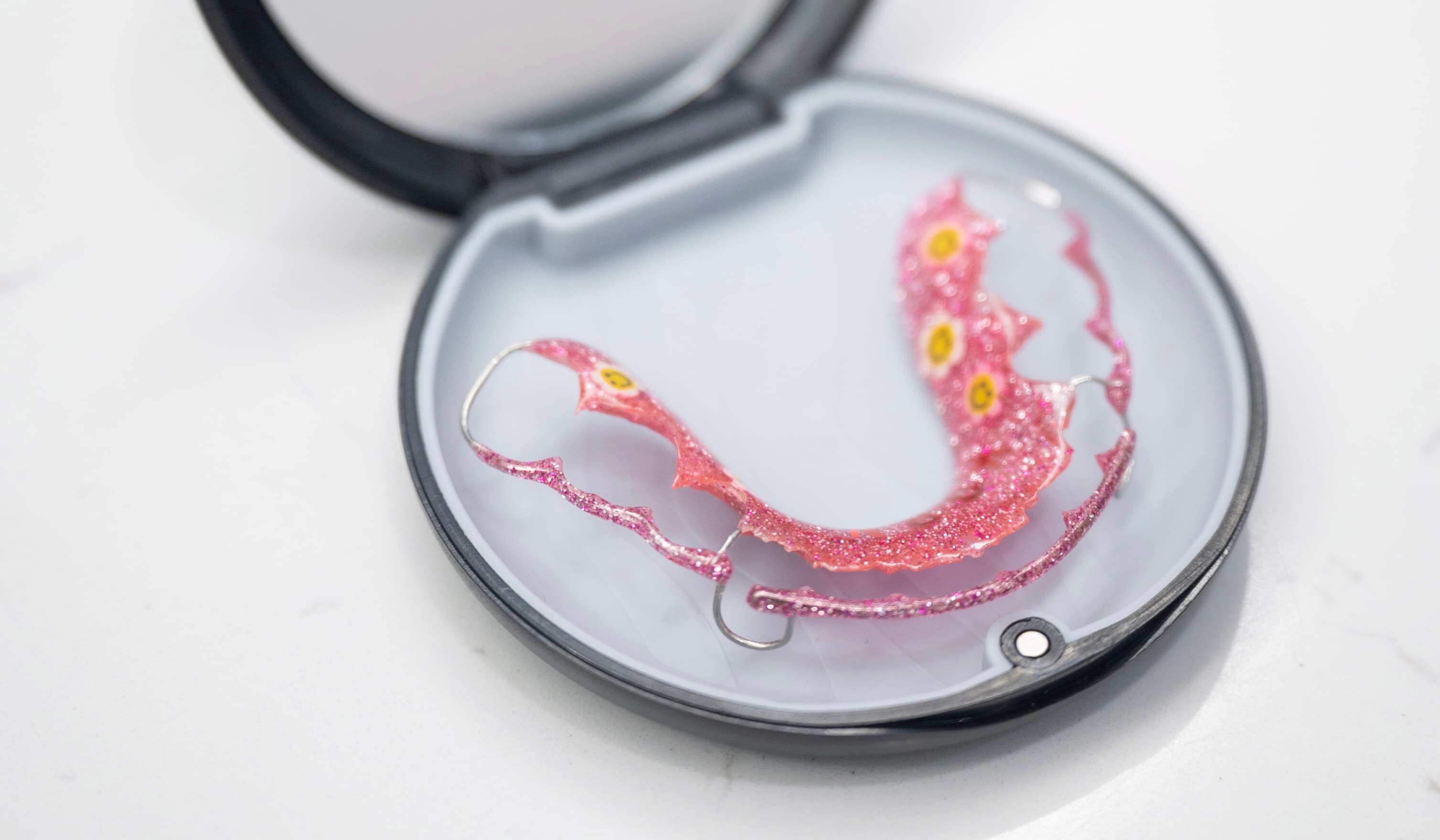
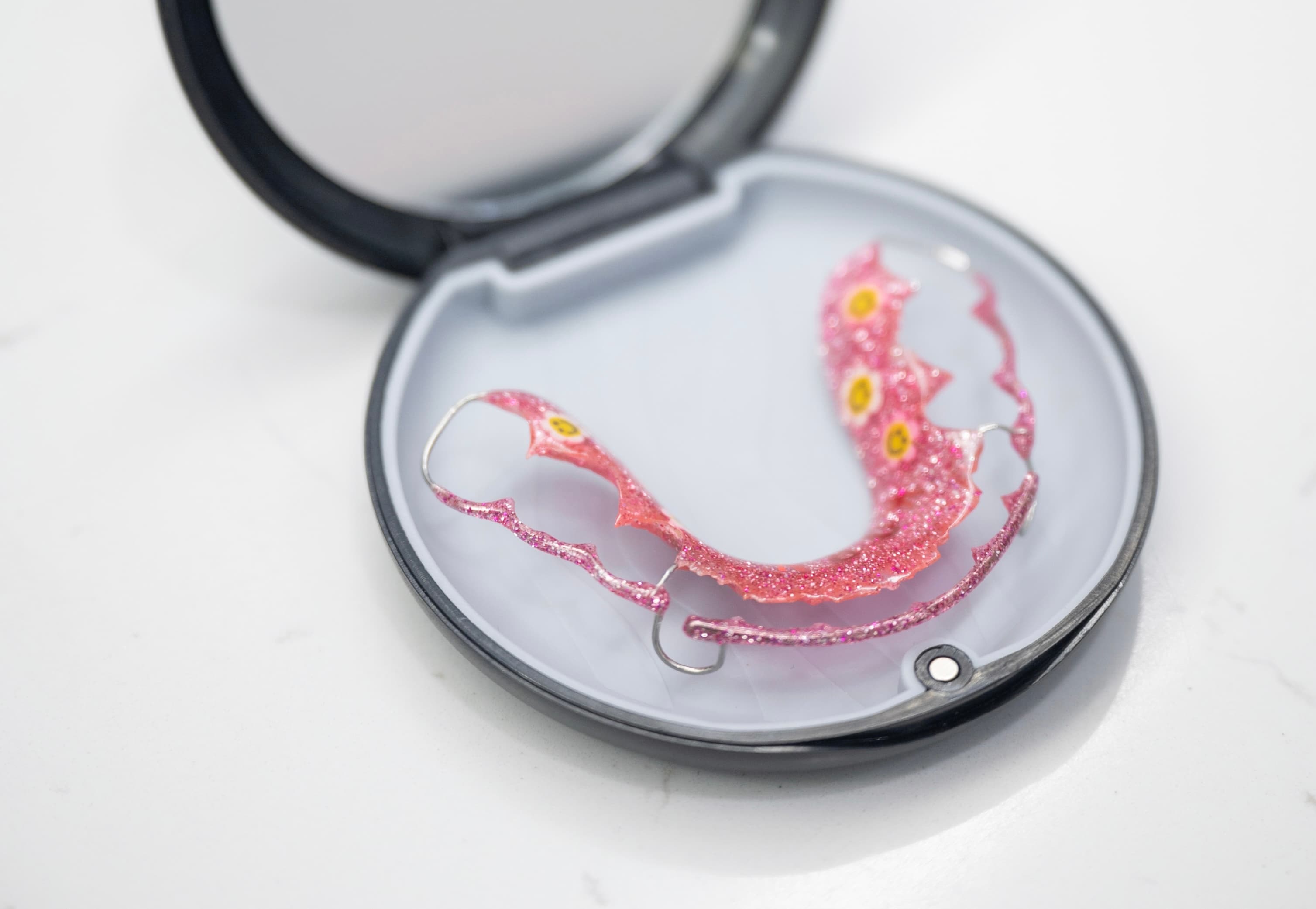
The colored retainer is the traditional wire-style retainer (similar to a Hawley Retainer), with an acrylic base against the roof of the mouth or inside the lower teeth, plus a front metal wire wrapped in colorful plastic tubing. You can choose colors, patterns, or even glitter as you like.
Pros
- The tubed wire locks firmly into the tooth line, holding tooth position well
- Choose your own color and pattern, adding fun to wearing a retainer
- Durable acrylic base, lasts a long time
Cons
- Your dentist can’t bend and adjust the wire like a bare wire if teeth start shifting
- May feel thick on the lips or slightly affect speech at first
- Wire is visible when smiling or talking, not ideal for those meeting people often
Clear Retainer
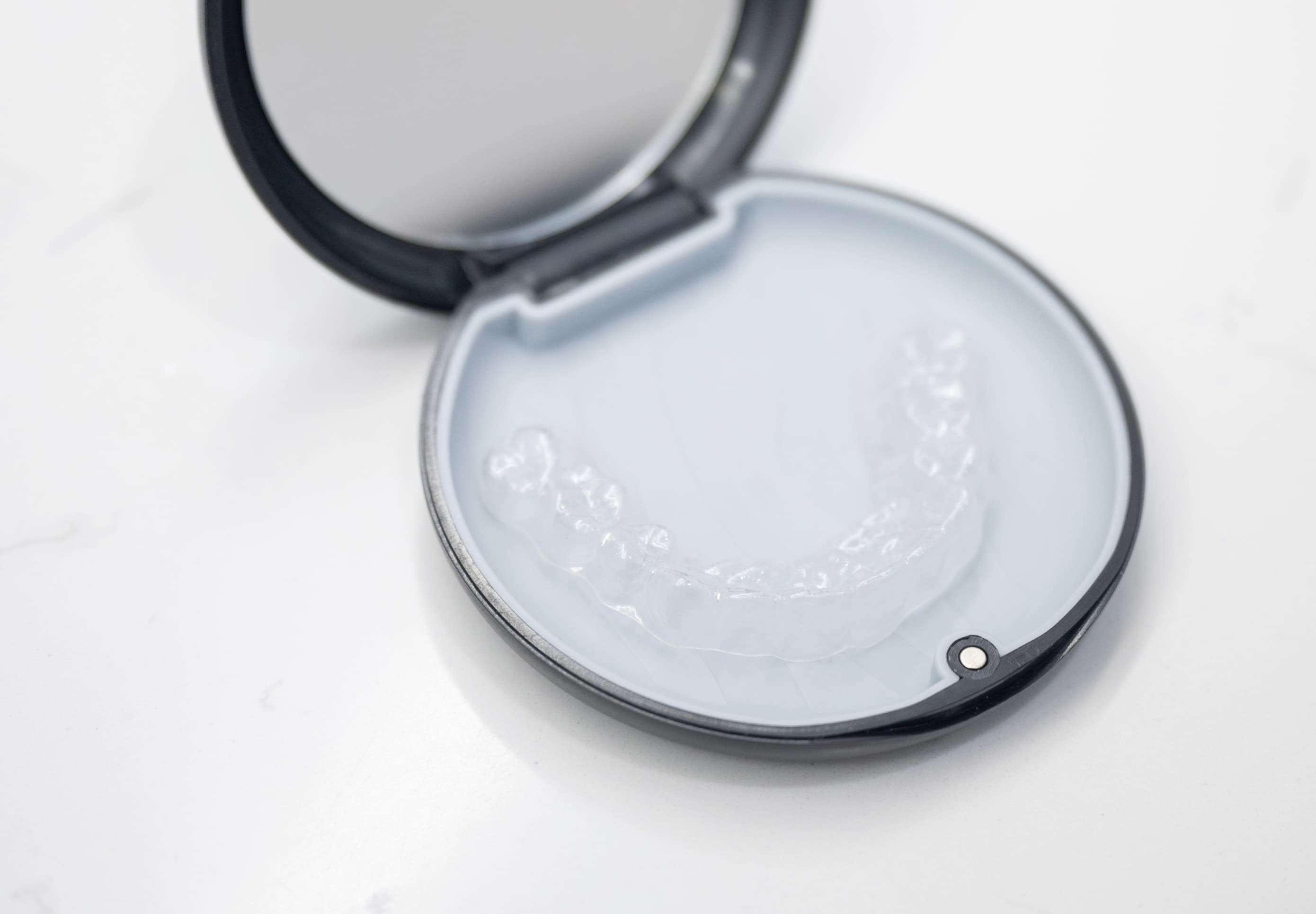
The clear retainer is made from clear plastic sheeting molded to cover the whole row of teeth, similar to a clear aligner tray. It’s barely visible when worn and has no palate piece like the wire type, so it interferes with speech less.
Pros
- Barely visible when worn, looks natural and professional
- No wire or metal parts to irritate lips and cheeks
- Easy to remove and clean, easier than the wire type
Cons
- Stains more easily from tea, coffee, or hot drinks than other types
- Less durable material than the wire type, may tear or cloud over time, needing periodic replacement
- May feel saliva pooling inside while speaking, which can be annoying at first
Bracket-Style Retainer
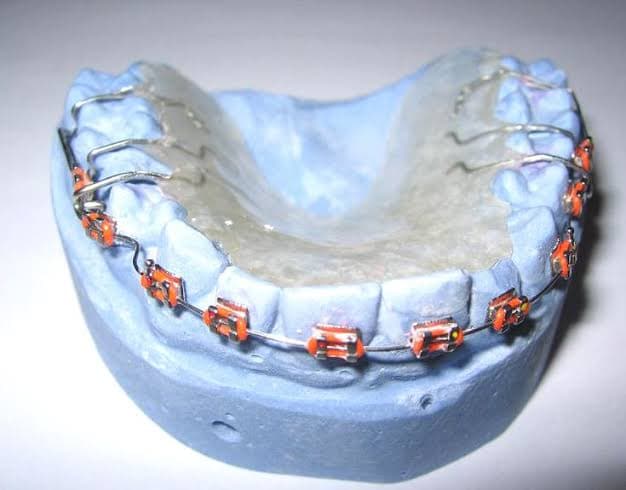
The bracket-style retainer has a similar structure to the colored retainer, but adds simulated brackets attached to the teeth, giving a "still in braces" look, along with colored elastic bands or chains you can change at home to match your mood or occasion.
Pros
- Change elastic band or chain colors yourself, fun and lets you keep updating your look
- Feels like still being in braces, good for those who miss that vibe
- Locks tooth position firmly, like the colored retainer
Cons
- Slightly pricier than colored or clear retainers, due to more parts
- Simulated brackets clearly visible when smiling, not ideal if you want a formal, tidy look
- Needs extra care cleaning around the brackets and bands, or food debris builds up easily
Fixed Retainer
A Fixed Retainer is a thin wire your dentist bonds permanently to the inside of your front teeth (usually canine to canine) with composite material. You can’t remove it yourself — only your dentist can remove or repair it. Usually used on the lower front teeth, the position most prone to shifting back, and some cases combine it with a removable retainer for double security.
Pros
- Wire is inside the teeth, invisible from outside — the most natural-looking of all retainer types
- No removing to eat — works 24 hours a day without needing patient discipline
- Ideal for the forgetful, or those worried about losing a removable retainer
Cons
- Composite material bonding the wire attracts tartar more easily than normal — poor care can cause gum inflammation
- Can’t floss normally underneath — needs special tools to clean
- If the wire comes loose or breaks unnoticed, teeth may start shifting without you realizing
- Suited to certain cases only — your dentist must assess suitability first

Which Retainer Should You Choose?
If you prioritize looks and invisibility while wearing it, the clear retainer is the best fit. If you want firm tooth-holding and like color, the colored retainer is great value. If you miss the braces vibe or want a fun, ever-changing look, the bracket-style retainer suits best. And if you’re forgetful about removing/wearing it, or want confidence that teeth won’t shift without relying on your own discipline, the fixed retainer is ideal. Your dentist will help weigh this against your specific teeth before you decide.
Retainer Price at Panda Dental Clinic
Service | Price |
|---|---|
Colored retainer / pair (upper-lower) | 3,990 baht |
Clear retainer / pair (upper-lower) | 3,990 baht |
Bracket-style retainer / pair (upper-lower) | 5,990 baht |
Colored retainer (1 piece) | 2,000 baht |
Bracket-style retainer (1 piece) | 3,500 baht |
Fixed retainer / jaw | [Enter price here] |
Adding a false tooth to a retainer / tooth | 800 baht |
Retainer adjustment | 300–500 baht |
If you only need a retainer for the upper or lower jaw alone, separate pricing is available. The price difference between types comes from material and manufacturing complexity — e.g. the bracket-style retainer has extra simulated bracket parts and elastic bands, so it costs slightly more than colored or clear retainers.
What Is Adding a False Tooth to a Retainer?
For those temporarily missing a front tooth, such as while waiting for an implant or crown, a false tooth can be added to the retainer base. Your dentist shapes it to match the color and form of your real neighboring teeth, giving you a tooth to smile and talk with while waiting for permanent treatment, without worrying about a visible gap. However, this is only a temporary cosmetic option — it can’t be used to chew hard food like a real tooth or implant can. Extra cost is 800 baht per tooth.
How Long Do I Need to Wear a Retainer?
Wearing a retainer generally follows these stages, per your dentist’s guidance:
- First 3–6 months: wear nearly all the time, except while eating and brushing, since this is the critical period when the periodontal ligament and surrounding bone haven’t fully adapted yet — teeth are most prone to shifting back
- 6 months to 2 years after: your dentist usually reduces this to nighttime wear only, while sleeping
- Long term: continued nighttime wear is recommended even after the critical period, since everyone’s teeth can shift throughout life from various factors
Your dentist will assess and adjust the right frequency for you at follow-up appointments.
What Happens If I Don’t Wear My Retainer?
If you neglect wearing your retainer as recommended, your teeth may shift back toward their pre-braces position — crowding returning, gaps reopening, or teeth twisting. In cases of major shifting, you may need to redo the entire braces process, losing time and money all over again.
A warning sign to watch for: if you forget to wear your retainer for several days to weeks, then put it back on and it feels unusually tight or hard to insert, that’s a sign your teeth have already started shifting. See your dentist right away rather than forcing it in or giving up on wearing it — the longer you leave it, the more your teeth shift and the harder it becomes to fix.
Caring for Your Retainer
Removable Retainers (Colored / Clear / Bracket-Style)
- Remove and clean with a soft brush and clean water every time after use; avoid toothpaste with abrasive particles, which can cloud a clear retainer
- Soak in clean water or a special cleaning solution when not worn; don’t leave it drying out of water for long, as the material can warp
- Avoid very hot water at every step, both cleaning and soaking, since heat easily warps plastic, especially clear retainers
- Always store in the case the clinic gave you when not worn — don’t wrap in tissue or leave it loose, since it risks being accidentally thrown away or chewed by a pet, a very common cause of damage
- If your retainer feels loose, unusually tight, cracked, or broken, go back to the clinic for adjustment or a replacement — don’t adjust or repair it yourself
Fixed Retainer
- Use a special floss threader or a water flosser instead of regular floss, since you can’t thread it under the wire normally
- Brush the inside of your front teeth extra thoroughly, since the composite bonding the wire attracts tartar more easily than normal
- Avoid very hard or sticky food that could dislodge or bend the wire
- Get regular checkups every 6 months so your dentist can check the wire and clean tartar from hard-to-reach spots
- If you notice the wire has come loose or feel your teeth moving, see your dentist right away — don’t leave it

Summary
Retainers are an essential step to continue after braces come off, to hold your results long-term. At Panda Dental Clinic Udon Thani and Nong Bua Lamphu, we offer colored, clear, bracket-style, and fixed retainers, starting at 3,990 baht, or see all our dental services.